Most breakage happens because a fragile item moved inside its box. A plate that cannot shift does not crack; a glass held firmly in place does not chip. Packing fragile things is mostly about stopping that movement, then making sure the box is handled the right way up.
This is how our crews pack the things that break most often, and what you can do if you pack some of them yourself.
The Materials That Matter
Good packing starts with the right materials. Newspaper alone is not enough: it marks surfaces with ink and flattens under weight.
- Strong double-wall cartons in small and medium sizes
- Bubble wrap for glass, ceramics and anything with a polished surface
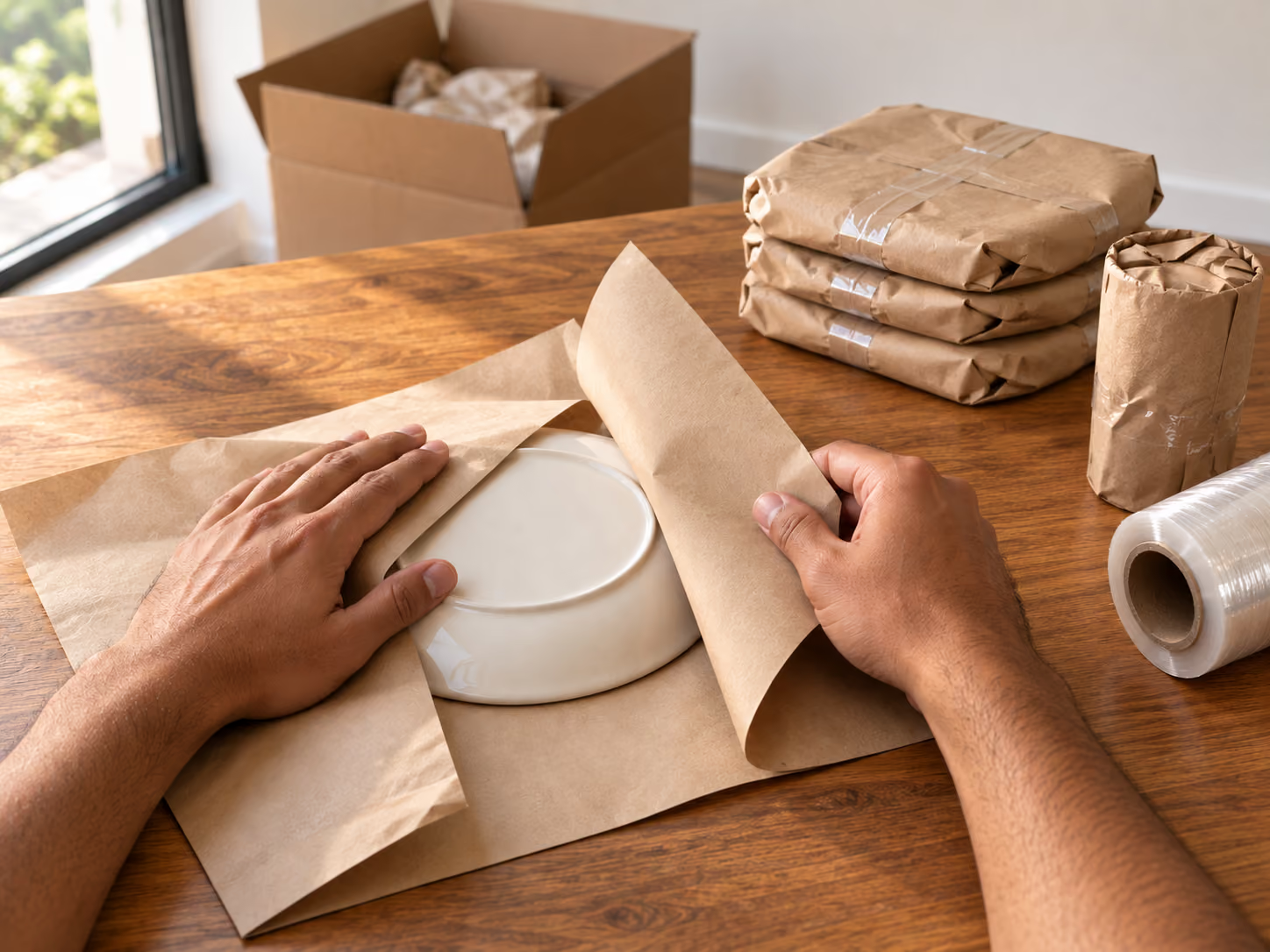
- Packing paper (plain, not newsprint) for wrapping and filling gaps
- Corner protectors and foam sheets for frames, mirrors and furniture edges
- Strong packing tape and a marker for labels
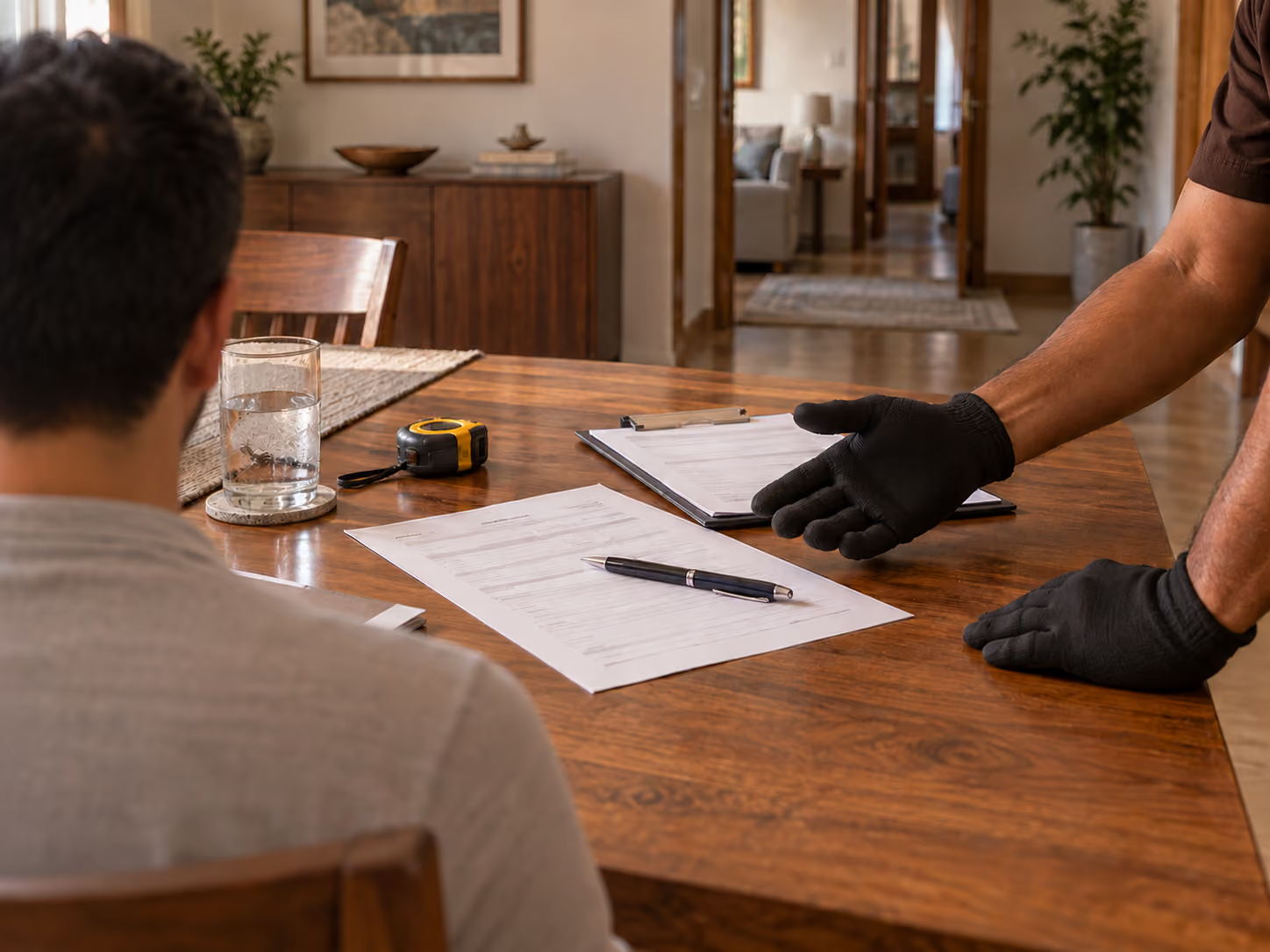
A crew-packed move uses materials of the quality specified in your quote.
Crockery and Plates
Wrap each plate on its own in packing paper, then a layer of bubble wrap for fine china. Stand plates on their edge in the box, the way they sit in a dish rack. A plate on its edge is far stronger than a stack lying flat, where the weight presses on the bottom one.
Line the bottom of the box with crumpled paper, fill every gap around the plates, and add more paper on top so nothing can shift when the lid closes.
Glasses, Cups and Bowls
Glasses are strongest when they stand upright. Fill each glass with crumpled paper, wrap it, and stand it in the box. Use cardboard dividers for sets of glasses or cups.
Bowls can be nested in small stacks of two or three with paper between each one, then wrapped as a stack and packed on their edge.
Mirrors, Glass Tabletops and Framed Pictures
Tape a large “X” across the glass with masking tape. It does not stop the glass breaking, but it holds the pieces together if it cracks, which protects the frame and the crew.
Add corner protectors, wrap the whole piece in bubble wrap and a foam sheet, and move it upright, never lying flat under other goods. Large mirrors, glass tabletops and valuable art travel best in a wooden crate built to their size.
Electronics
- Photograph the cable connections before unplugging anything, so setting up is quick later.
- Use the original box if you still have it. It was designed for the item.
- Pad screens with foam or a blanket, and never lay a television flat. Its screen is designed to stand upright.
- Remove batteries, discs and loose parts, and pack them separately in labelled bags.
- Back up computers before the move, and carry laptops and hard drives with you.
Lamps, Vases and Decorative Pieces
Remove lampshades and bulbs, and pack them in separate boxes. Wrap vases and figurines in several layers, fill hollow pieces with paper, and pack them upright in small boxes with plenty of filling.
For antiques and pieces with real value, declare the value on the inventory and ask for a custom crate. Our antique moving service crates fragile and valuable pieces individually.
The Box Rules
- Heavy items in small boxes, light items in large ones. A large box of books or crockery is too heavy to carry safely and too likely to be dropped.
- No gaps at the top. A box that caves in when another sits on it was not filled.
- Label the side as well as the top, so the label is visible in a stack: “FRAGILE”, “THIS WAY UP” and the room.
- Tape the bottom twice. The bottom carries the weight.
- Keep fragile boxes separate from heavy furniture and other heavy boxes until loading.
When You Pack Yourself
Many people pack books, clothes and soft items themselves to save time and money, and that works well. Fragile items are different.
Boxes you pack and seal yourself sit outside the bond, because we cannot vouch for what we did not wrap. If something inside a customer-packed box breaks, there is no way to tell whether it was packed well. You will get our packing advice at the time of booking, and following it gives your own boxes the best chance.
If you want fragile items covered, let our crew pack them as part of house shifting. It costs a little more, but it is the only way the packing and the transport are both our responsibility.
On Delivery
Unpack fragile boxes yourself, or with the crew, as soon as you can. Check each item, and if you find visible damage, mark it on the delivery receipt, take photos and report it within 48 hours. The inventory and the photos are what a claim is checked against.
For the rest of the move, our four-week house shifting checklist covers what to do and when. A careful hour of packing is worth more than any amount of care in transit. Stop the movement inside the box, and most breakage never happens.