Goods in storage rarely come to harm from theft. They come to harm slowly: from moisture that creeps into wood and fabric over weeks, from heavy items pressing down on lighter ones, and from cartons that are simply lost track of.
This guide explains what actually keeps household goods in the condition they arrived, and what to ask any storage provider before you hand over your belongings.
Off the Floor
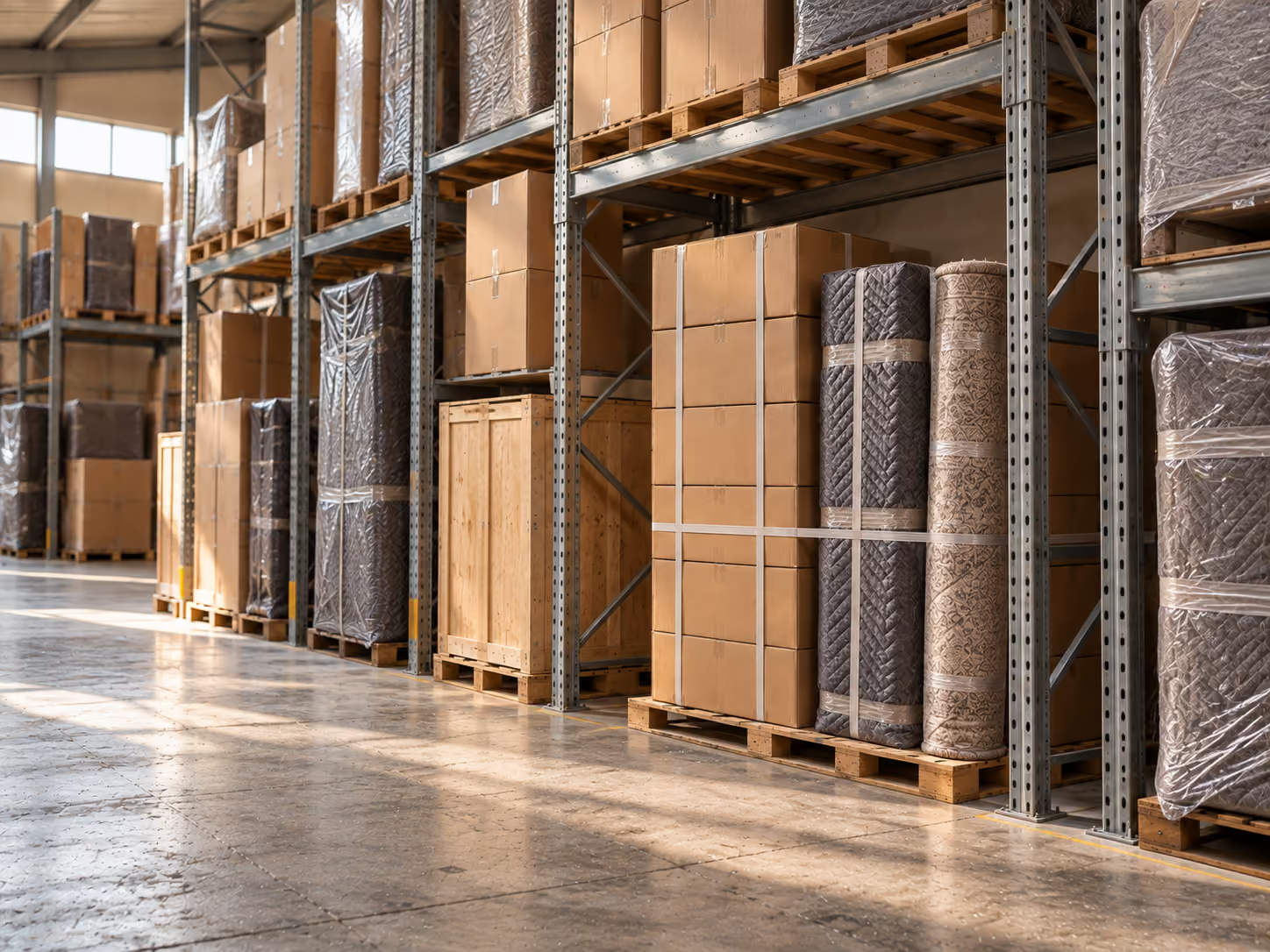
Goods go onto racking, not stacked on the warehouse floor. That does two things.
It keeps them away from the floor, where damp collects and where water would reach first if there were ever a leak. And it stops the weight of heavy items, such as a stack of book cartons, crushing the boxes underneath over the weeks they sit there.
Large furniture that cannot go on a rack stands on pallets, wrapped, with nothing heavy placed on top.
Against Humidity
Humidity is the biggest risk in Indian cities, especially on the coast and through the monsoon. Wood swells and warps, upholstery and mattresses pick up a musty smell, paper curls, and metal can rust.
- Goods stay wrapped for the whole storage period, not only for the journey to the warehouse.
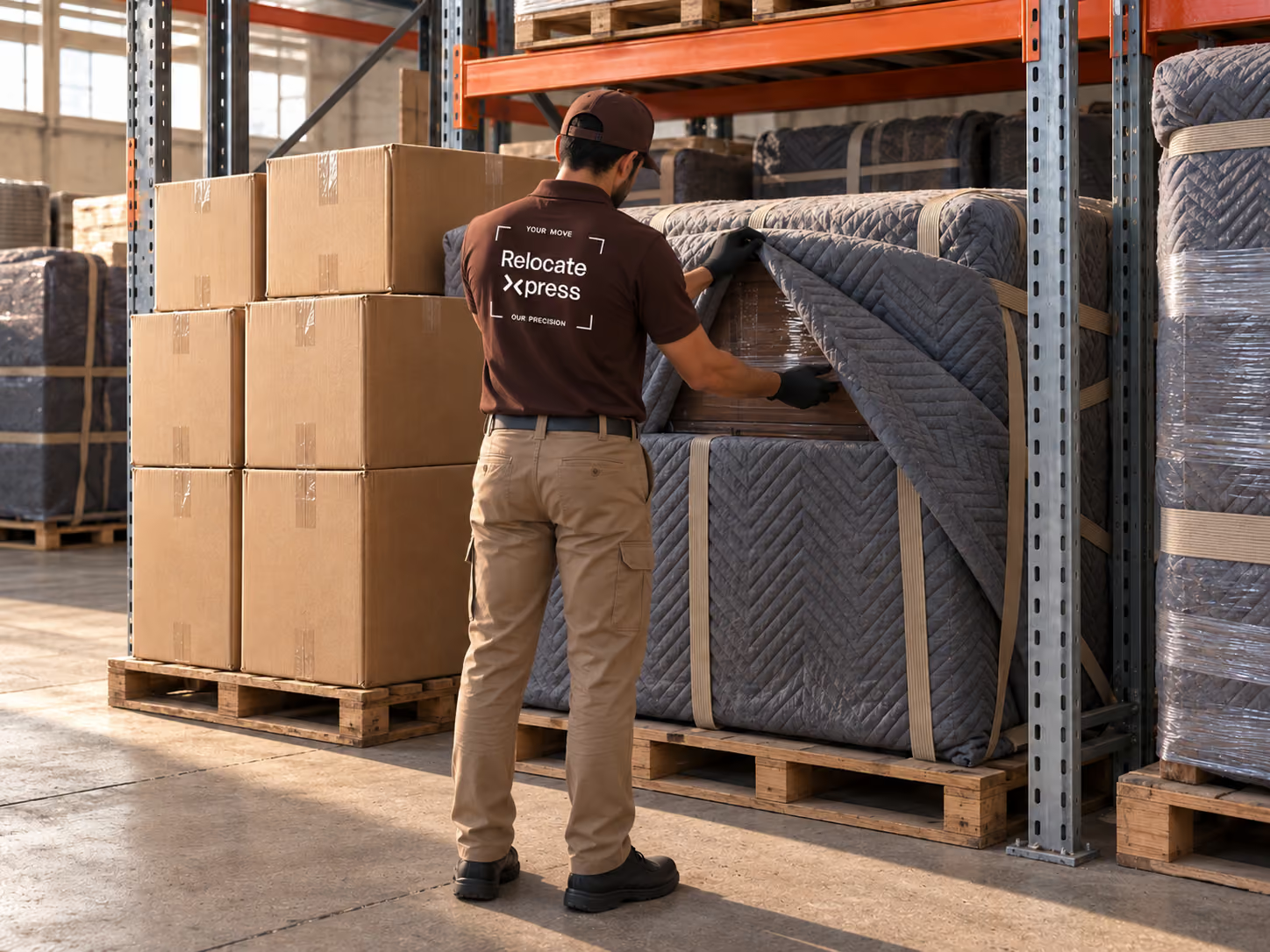
- Wooden furniture is wrapped in breathable material that keeps dust out without trapping moisture against the surface.
- Mattresses and sofas are covered completely.
- Electronics are packed in their boxes or well-padded cartons.
A climate-controlled section is available on request for pieces that need it, such as fine wood, musical instruments or valuable art.
Counted in and Out
The most common storage problem is not damage but confusion: a carton that cannot be found, or a box delivered to the wrong person. A strict inventory prevents both.
- Every carton and item is listed as it arrives, with a label that matches the list.
- The same list is used when goods leave, item by item.
- If you take something out mid-way, it is logged against the list, so the record always matches what is on the racks.
You get a copy of the inventory when your goods go into storage. Keep it until everything is back in your home.
Security
Under our secure storage service, goods are held in our own warehouse at the branch, with access controlled and visits by appointment. Only our staff handle your goods, and only against the inventory.
Cover While Goods Are Stored
Anything on your storage inventory that goes missing is paid at its current value, for as long as it is held. Damage Cover, at 3% of the declared value, can be added for the whole period too, not just for the journeys to and from the warehouse. Its cost is shown in your quote before you book. If your goods are valuable, or the storage period is long, it is worth having.
How Storage Is Priced
Storage is priced by the volume of your goods and the length of time they are held, at a rate fixed when you book. If your new home is delayed, the number of weeks or months changes, but the rate does not.
On our storage pages, a 1 BHK costs about ₹4,000 a month to store, and a 4 BHK about ₹11,500 a month, with weekly and three-monthly rates for shorter and longer stays. Delivery out of storage is a separate move, quoted on the same survey, so it is not a second surprise later.
What to Ask Any Storage Provider
- Are goods on racks, or stacked on the floor?
- Are they kept wrapped for the whole period?
- Will I get an itemised inventory, and is the same list used when goods leave?
- Can I visit, or take something out mid-way?
- What is paid if something goes missing or is damaged, and what does that cover cost?
- Is the rate fixed when I book, or can it change?
Before Your Goods Go In
- Pack for the long term. Clean and dry everything before it is packed. Damp clothes or a wet fridge will cause problems in storage.
- Keep out what you will need. Seasonal clothes, documents and anything you may want in the next few months should stay with you, or be packed in clearly labelled cartons near the front.
- Declare the value of important items on the inventory.
- Plan the delivery. Book the gate pass and lift slot at your new home before the goods leave the warehouse.
Not sure you need storage? See when storage between homes makes sense, or, for a builder’s delay, storing goods during a delayed possession. Storage done properly is quiet: your goods go in, nothing happens to them, and they come out as they went in.