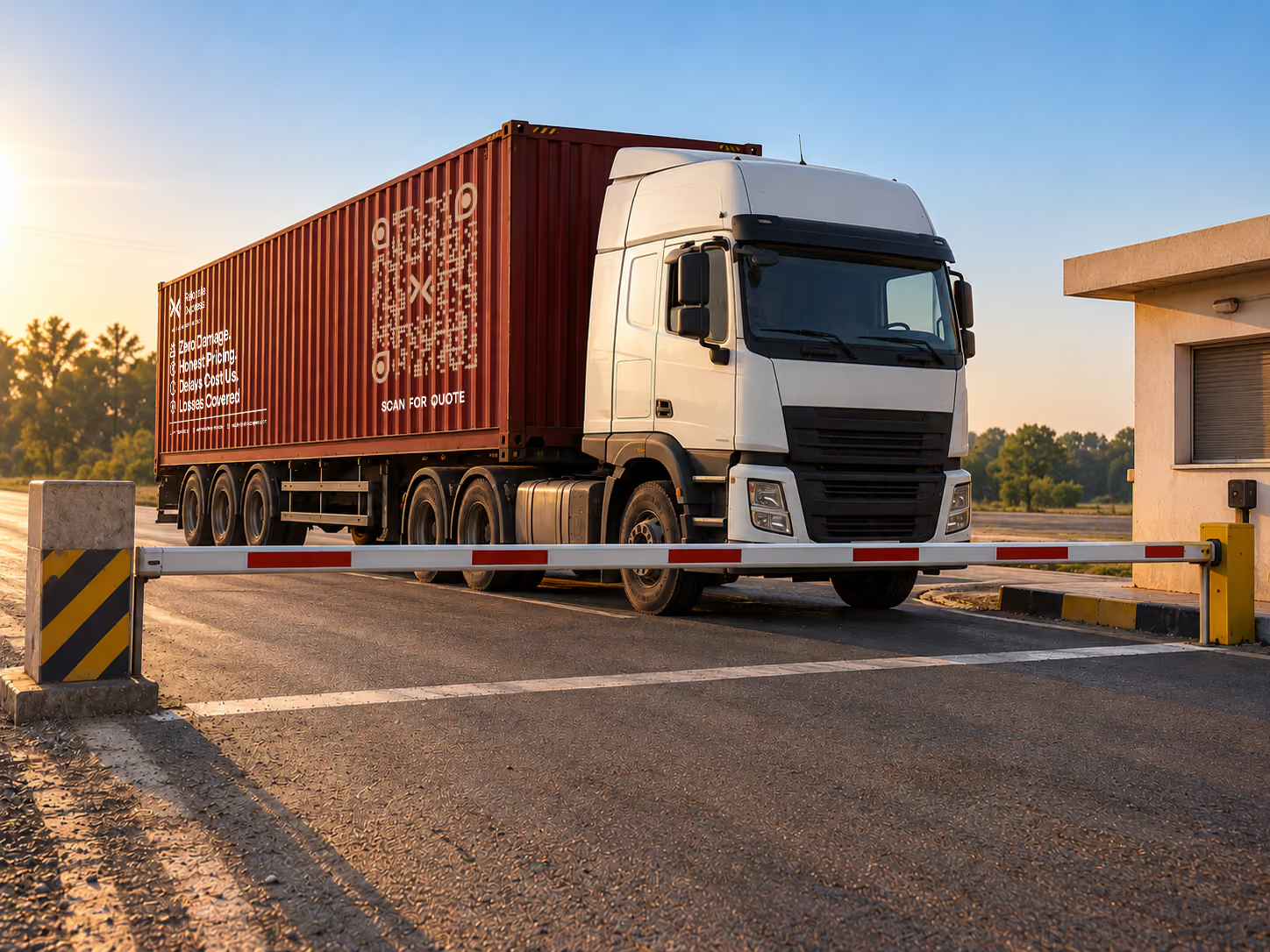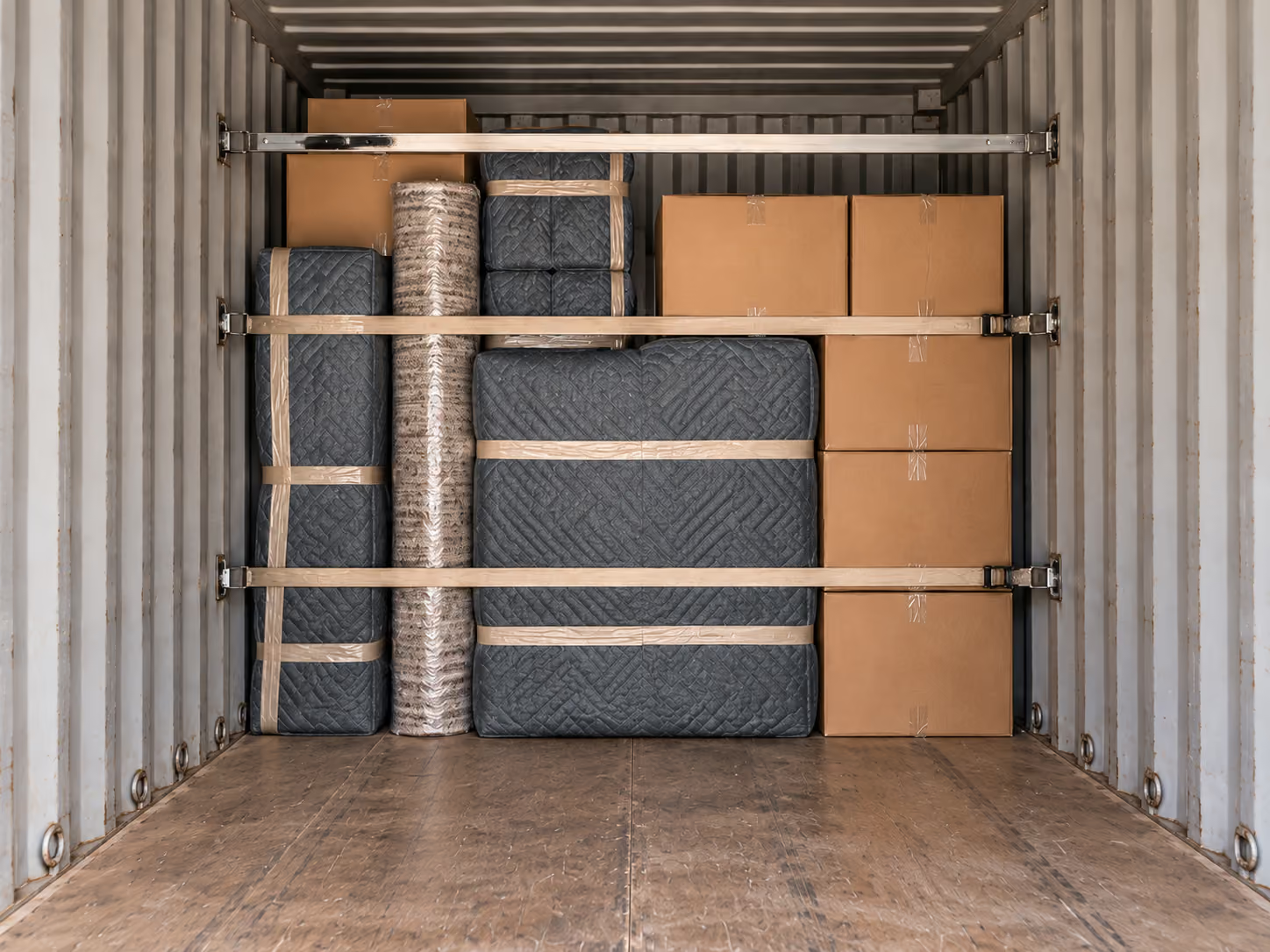
Between cities, your goods travel one of two ways: sharing a truck with other consignments, or in a container of their own. The choice decides what you pay and how predictable your arrival date is, so it is worth understanding before the survey.
Part Load
In a part load, your goods share a truck with other households moving along the same corridor. You pay for the space your goods take, not for the whole vehicle, which is why it costs less.
The trade-off is time. A part-load truck leaves once it has enough consignments to fill it. On a busy corridor, such as Bangalore to Hyderabad, that can happen within a day or two. On a quieter one, the wait can add several days. The truck may also stop to load or unload other consignments along the way.
Part load suits:
- A 1 BHK, a studio or a partial move
- Moves where a few extra days in transit do not matter
- Budgets where the saving matters more than the date
Full Container
A full container, 19ft or 32ft, carries only your goods. It is loaded at your home, sealed, and leaves as soon as the loading is done. Nothing else is added along the way.
It costs more because you are paying for the whole vehicle. In return, the move runs on your schedule. There is no wait for other loads, fewer stops, and less handling, because your goods are not moved around to make room for anyone else’s.
Full container suits:
- A 2 BHK and larger homes
- A fixed date, such as a joining date or a lease that ends on a set day
- Homes with a lot of fragile or high-value furniture
Which Size of Container
These are starting points. The surveyor sizes the load from what is actually in your home, because two homes with the same number of rooms can need very different space.
What It Costs
On our route rate cards, a 1 BHK part load starts at around ₹11,000 on a short run like Bangalore to Chennai, and around ₹24,000 on the longest runs, such as Bangalore or Chennai to Delhi. A 4 BHK in a 32ft container on those longest runs costs about ₹76,000. Every route page shows its full table by load size, and all routes are listed together.
On short runs under about 400 km, a 32ft container is not used, because a 19ft container carries even a large home over that distance.
How to Choose
Our guide to transit time on a long corridor explains how much the wait can add. For a household move, start with house shifting. Ask yourself three questions:
- Is the arrival date fixed? If you have to be settled by a certain day, choose a full container.
- How much is in your home? Let the survey answer this, not the number of rooms.
- How fragile is it? Less handling in transit means less risk for delicate furniture.
If the date is flexible and the home is small, a part load saves money. If either is not true, a full container usually works out better.
What Stays the Same Either Way
Whichever you choose, the way the move is run does not change:
- A surveyor sizes the load before we quote
- The quote is written, valid for 30 days, and capped at 5% in the bond
- Every item is listed on the inventory at pickup
- The delivery window is written into the Written Commitment Bond before packing begins
The difference is only in how the goods travel. The promises about them are the same.