Transit time on a long move is usually stated as a range, such as five to eight days from Bangalore to Delhi. The distance does not change, so it is fair to ask why the answer is not a single number.
Several things beyond distance decide where in that range your goods arrive. Knowing them helps you plan, and helps you spot a promise that is too good to be true.
The Distance Itself
A truck carrying household goods travels more slowly than a car. It is heavy, it keeps to speed limits for commercial vehicles, and the driver needs rest. On our longest routes, more than 2,000 km, the driving alone takes several days.
Every route page shows its own distance and transit range, and all routes are listed together.
Consolidation
The single biggest variable on a long corridor is whether your goods travel as a part load.
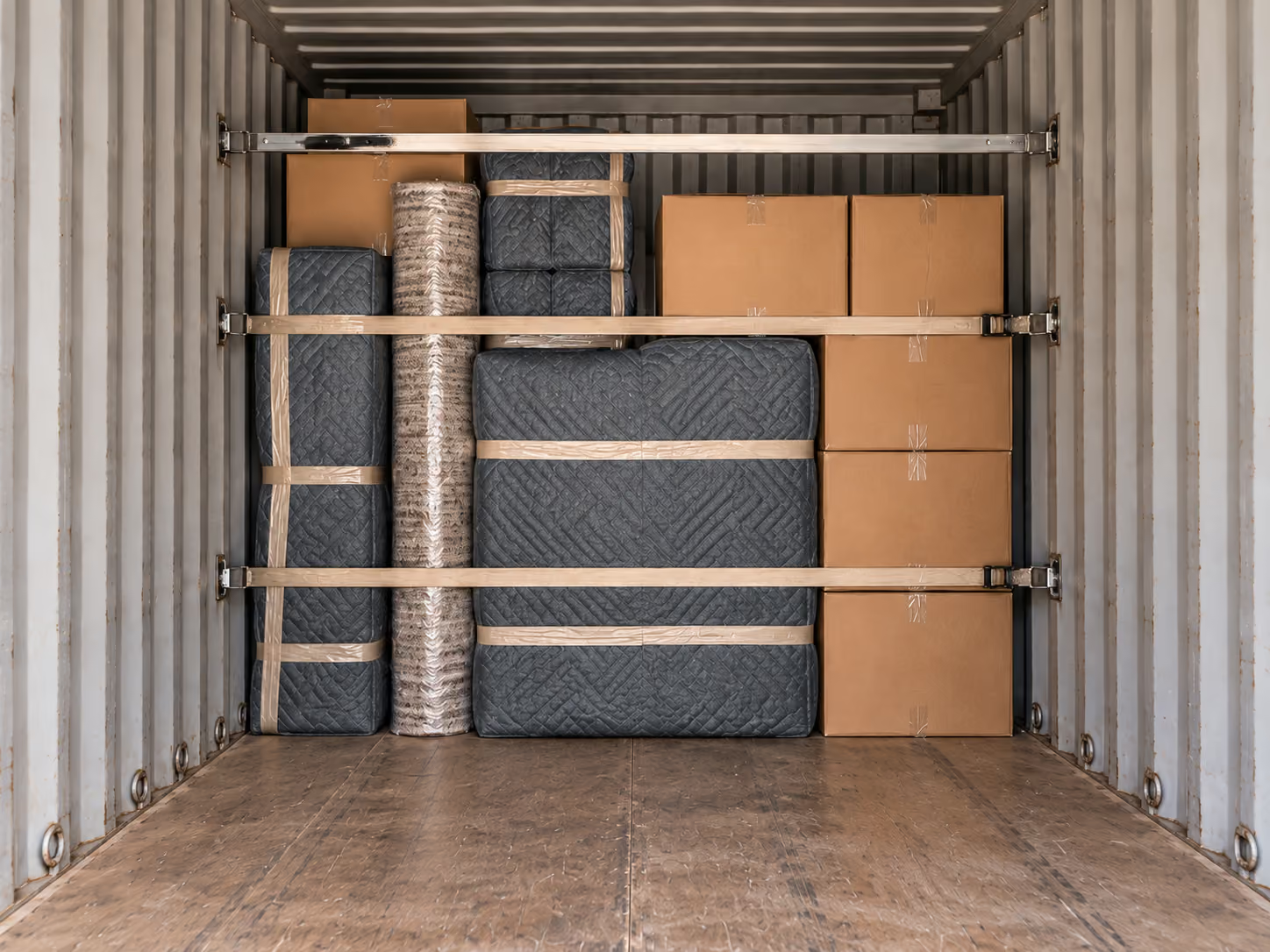
A part load waits until the truck is full of consignments going the same way. On a busy corridor, that wait is short. On a quieter one, it can add days before the truck even leaves. A full container skips the wait entirely, because it leaves as soon as your goods are loaded. Our guide to part load or full container helps you choose.
If your arrival date is fixed, this is the first thing to decide.
State Borders and Paperwork
A long corridor crosses several states. Each has its own checks for commercial vehicles, and a truck with incomplete documents can be held for hours.
The paperwork that travels with your goods, including the inventory, the consignment note and any e-way bill required, is prepared before loading so these checks stay short. This is one reason we ask for the right documents at booking rather than on the day.
Weather and Season
India’s weather changes the roads through the year:
- The monsoon, from June to September, can flood stretches of highway or close ghat roads at short notice, especially on the western coast.
- Summer heat through central India in April and May slows daytime driving for safety.
- Fog in north India in December and January reduces speed on early-morning stretches.
- Festival periods, such as Diwali, crowd the highways and the toll plazas.
None of these can be promised away. A sensible transit window already allows for the season you are moving in.
The Arrival City
Some cities restrict when large commercial vehicles may enter. Delhi, for example, limits truck entry to certain hours, so a load bound for central Delhi is timed to those hours. A load bound for Noida can often take the Yamuna Expressway and avoid the city altogether.
Apartment societies add another layer. Many allow deliveries only in set hours, or need a gate pass and lift slot booked in advance. Our branch books these before your goods arrive, so the truck is not left waiting at the gate.
What You Can Do to Keep It Short
- Choose a full container if your date matters.
- Have your documents ready at booking, including ID and any vehicle papers for car transport.
- Tell us about society rules at both ends during the survey.
- Avoid the busiest dates where you can: month ends and the days around big festivals.
- Keep your phone reachable on the delivery day, so the crew can confirm the time.
How We State It
The transit range on each route already accounts for the distance, the corridor and the season. When you book, your delivery window is written into the Written Commitment Bond before any packing begins, together with what we owe you if we miss it. Ask for the full bond terms with your quote.
Be careful with any mover who promises a long-distance delivery far faster than these ranges. A truck can only travel so fast, and a promise that ignores the road is usually made to win the booking, not to be kept.